
An Incredibly Easy Method That Works For All
10 Apr 2021
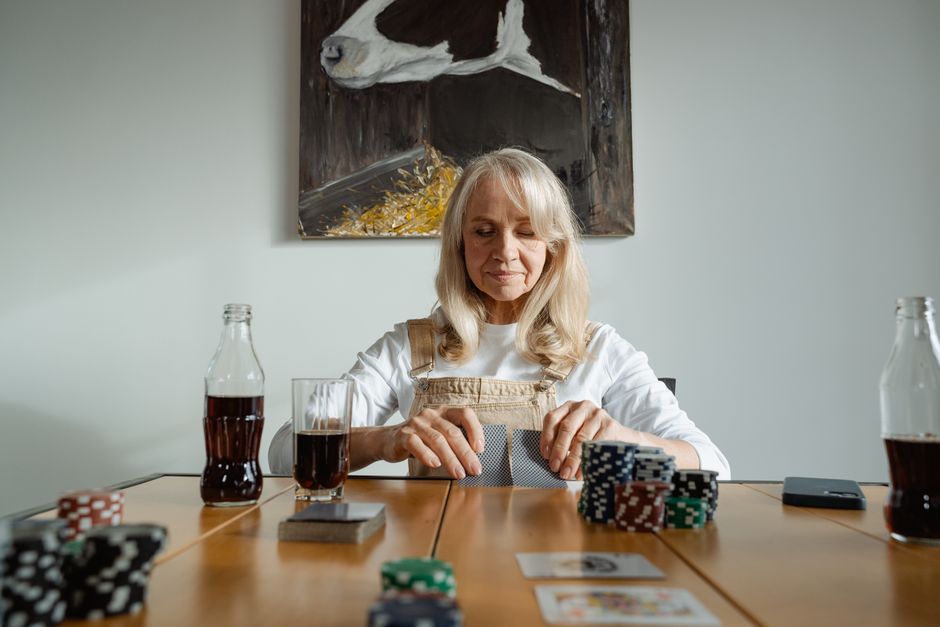
Most people lose money in iGaming for one reason: they treat it like a lottery ticket instead of a skill-based hobby. The industry is worth over $100 billion globally, and it’s not because everyone’s lucky. The players who consistently come out ahead — or at least stretch their bankroll for hours of entertainment — understand something the casual bettor doesn’t. They know that slots, sports betting, and poker are three completely different animals, each with its own math, psychology, and rhythm. This isn’t about chasing a magic system. It’s about playing smarter, knowing when to walk away, and squeezing every bit of value from bonuses and game selection.
Walk into any casino floor and you’ll see rows of glitzy machines. But the screen doesn’t tell you the two numbers that actually matter: RTP (return to player) and volatility. RTP is the theoretical percentage of all wagered money a slot returns to players over millions of spins. A 96% RTP machine loses 4 cents per dollar long-term; a 92% machine loses 8 cents. That difference compounds fast. Online, you can filter by RTP — always aim for 96% or higher. Brick-and-mortar casinos often hide this, but you can usually find it in the help menu.
Volatility (or variance) determines how the wins are distributed. Low-volatility slots pay small amounts frequently, keeping you entertained but rarely doubling your bankroll. High-volatility slots like Book of Dead or Bonanza can go 200 spins without a win, then drop a 5,000x payout. Which is better? Depends on your goal. If you have a $50 bankroll and want two hours of play, low volatility is your friend. If you’re chasing a jackpot with money you can afford to lose, high volatility gives you a shot.
Every weekend, millions of people bet on football, basketball, and soccer. Most lose. Not because they’re stupid, but because they bet with their heart or on a hunch. The betting market is efficient — the odds reflect all available information. To beat it consistently, you need an edge the market hasn’t priced in. That could be a proprietary statistical model, insider knowledge of an injury, or exploiting a soft line before it moves.
For the recreational bettor, the goal should be to minimize the house edge. That means shopping for the best odds. A -110 line (bet $110 to win $100) is standard, but some books offer -105 or even +100 on the same game. Over 100 bets, that 5-cent difference saves you $50. Also, avoid parlay sucker bets unless you’re chasing a lottery-style payout. Correlated parlays (like betting a team to win and the over) can sometimes have value, but straight bets are the foundation.
Bankroll management is non-negotiable. The classic rule: bet 1-2% of your total bankroll per game. If you have $1,000, that’s $10-$20 per bet. This keeps you in the game through losing streaks, which are inevitable even for winners. Track every bet — not just wins and losses, but the closing line. If you consistently beat the closing line, you’re a sharp bettor, even if short-term variance hides it. Many readers start with สล็อต when comparing options.
Poker is the lone iGaming discipline where long-term profit is purely skill-based. Slots and sports betting have a negative expected value (EV) unless you’re in the top 1% of bettors. Poker, against weak opponents, can be positive EV. The money comes from mistakes: calling too much, bluffing too often, playing too many hands. Your job is to make fewer mistakes than your opponents and exploit theirs.
Start with tight-aggressive play. In Texas Hold’em, that means folding 80% of your starting hands from early position. Most beginners play 50% — that’s a fast track to busto. Position matters more than cards. On the button, you can profitably open with a wide range like K9s or A5s. Under the gun, you should only open with premiums: AA, KK, QQ, AK, and maybe AQ. Learn pot odds. If you have a flush draw on the flop, you have roughly 36% equity by the river. If the pot is $100 and your opponent bets $20, you’re getting 6-to-1 (needing 14% equity) — easy call. If they bet $80, you’re getting 2.25-to-1 (needing 31%) — still close, but now implied odds come into play.
Also, specialize in one format. Cash games, tournaments, and sit-and-gos require different strategies. Tournament players need to survive and accumulate chips; cash game players can rebuy. Don’t mix them until you’re profitable in one.
Casinos love to dangle 100% match bonuses up to $500. Read the fine print. A typical bonus comes with a 35x wagering requirement on the deposit + bonus. Deposit $100, get $100, and you must wager $7,000 (35 x $200) before withdrawing. Slots contribute 100% toward wagering; table games like blackjack might contribute 10% or 0%. So if you play blackjack, you’d need to wager $70,000. That’s not a bonus — that’s a leash.
Smart players look for low wagering (under 20x), no max cashout, and games that contribute 100%. A 10x bonus with a 200% match is worth more than a 50x bonus with a 500% match. Also, avoid “sticky” bonuses where you can’t withdraw the bonus itself — only winnings. Always calculate the real EV: if the bonus is $100 with 30x wagering and the house edge on your chosen game is 3%, your expected loss is $90. The bonus is nearly worthless. If the house edge is 1% (blackjack with basic strategy), your expected loss is $30 — still not great, but better.
iGaming is designed to keep you playing. Lights, sounds, near-misses, and variable rewards all trigger dopamine. That’s not evil — it’s entertainment. But it becomes a problem when you chase losses. The single most profitable decision you can make is to walk away after a pre-set loss limit. Decide before you deposit: “If I lose $100, I stop.” Then actually stop. Similarly, if you’re up $200, bank half of it. The biggest downswings come from giving back a big win because you got greedy.
Use time limits. Online platforms let you set session reminders. If you play slots for three hours, your judgment degrades. Take breaks every 45 minutes. And never play when you’re tilted — after a bad beat in poker, a blown parlay, or a slot bonus that paid nothing. Tilt is the enemy of edge. Step away, go for a walk, come back tomorrow. The games will still be there.
At the end of the day, iGaming is a spectrum. Slots are pure entertainment with a known cost per hour — treat them like a movie ticket. Sports betting is a battle against the market; only bet when you have a reason the odds are wrong. Poker is a mental sport where the best player at the table takes home the money. No single strategy guarantees profits, but understanding the math, managing your bankroll, and controlling your emotions puts you ahead of 90% of players. That’s not just an edge — it’s the difference between a hobby that drains you and one that rewards you.

The Gladorchard Real stories, useful guides and the occasional recommendation, all in one calm corner of the web.

April 25, 2019 at 10:46 am
Take in the iconic skyline and visit the neighbourhood hangouts that you've only ever seen on TV. Take in the iconic skyline and visit the neighbourhood.


Want to be notified when we launch a new template or an udpate. Just sign up and we'll send you a notification by email.


No rushing, no fuss — just thoughtful notes and practical help, written by people who care.

Soldman Kell
April 25, 2019 at 10:46 am
Take in the iconic skyline and visit the neighbourhood hangouts that you've only ever seen on TV. Take in the iconic skyline and visit the neighbourhood.